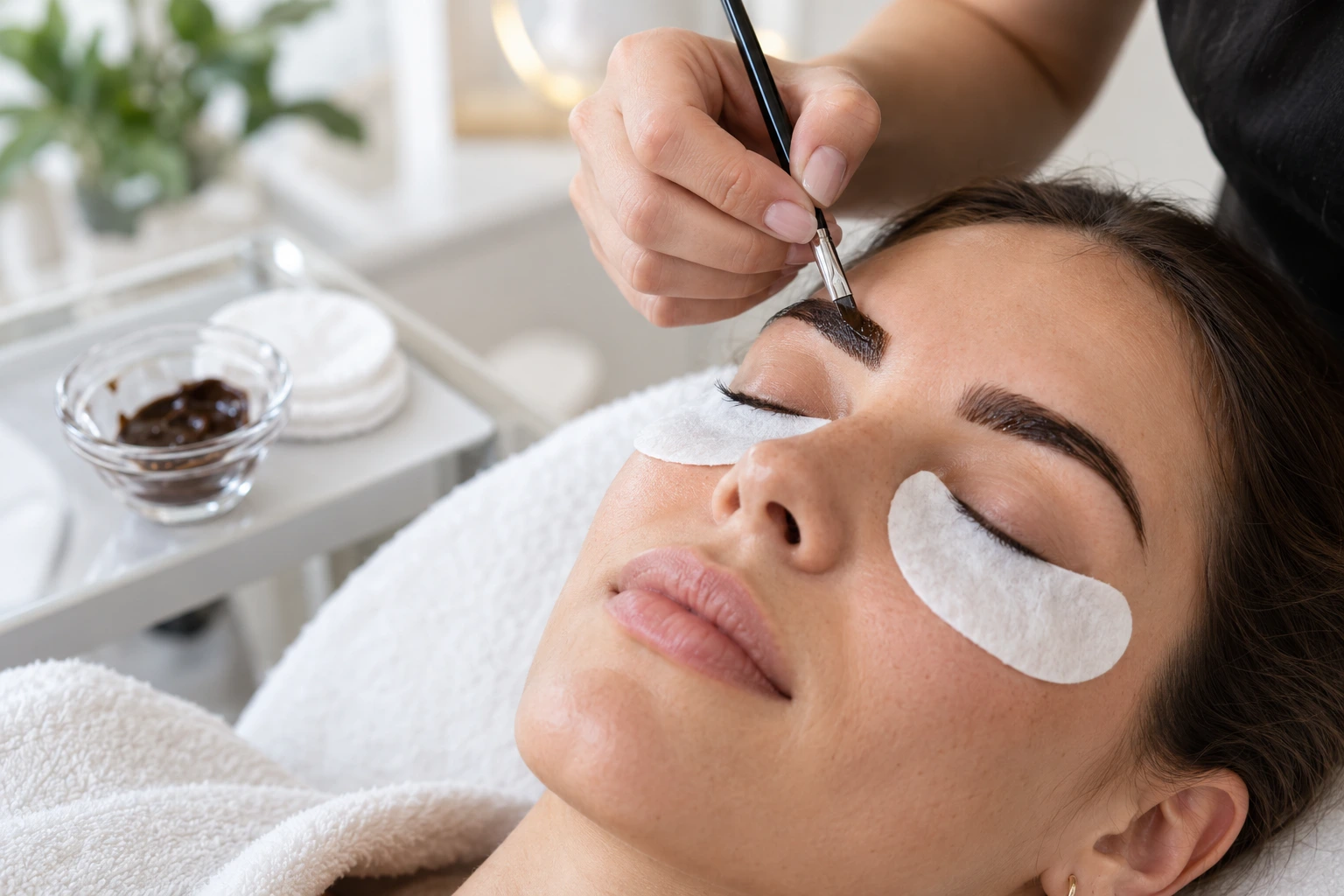
A clean, even tint is one of the quickest ways to make a brow or lash service look finished. It is also one of the easiest to get wrong: too much skin stain, a shade that goes warm in two weeks, or a client who reacts because the patch test was skipped. This guide walks through how professional tints differ, how to choose and mix a shade, how to work safely, and how to look after the result, with the Noemi products we stock at Brow Lash World as a practical reference.
Hybrid, gel and liquid dye: what is the difference?
The three words are used loosely in the industry, so it helps to separate formulation from marketing. What matters in the studio is how the product behaves on the hair and on the skin.
Hybrid dye
A hybrid tint is designed to colour the hair and leave a visible stain on the skin underneath, which is what makes sparse or gappy brows look filled in. Noemi describes its Hybrid Brow & Lash Dye (15 ml) as a care-formula tint with a pH of 9-10, working on both brows and lashes. According to the product information, you can expect the colour to stay vibrant on the skin for about 8 days and on the hair for 4-6 weeks. These are manufacturer figures, and real results depend on skin type, hair porosity, aftercare and how often the client exfoliates.
Gel dye
In general, a gel-texture tint is thicker and holds its position on the brow, which makes it easier to control around the edges. Gel developers work the same way: they keep their structure instead of running. If you want a firm, defined edge, a gel texture is usually the more forgiving choice for a beginner.
Liquid dye
A liquid tint is more fluid, spreads quickly and tends to penetrate evenly, but it needs a steadier hand and good skin protection because it can travel. Noemi presents its Dye Gel (Liquid) as a liquid hybrid dye enriched with plant proteins, sold per shade at CHF 14.90 in beige, espresso, grey, perl and spice. A kit with all five shades is also available.
| Type | Texture | Skin stain | Control | Best for |
|---|---|---|---|---|
| Hybrid (cream) | Soft cream, mixed 1:1 with developer | Visible, designed to stain skin | Good with a fine brush | Filling gaps, defined brows, lashes |
| Gel | Thicker, holds shape | Moderate to strong, depends on developer | Very good, little running | Beginners, precise edges |
| Liquid | Fluid, spreads fast | Varies by formula | Needs a steady hand and a barrier | Even coverage, quick application |
Developers and mixing
Noemi hybrid dye is mixed with its developer in an equal ratio, 1:1, then applied and left for 10-15 minutes. The choice of developer changes the result.
- Developer 3% (cream): the everyday option, with a creamy texture that does not run. It is available in 14 ml, 50 ml and 100 ml from CHF 9.90, and suits natural colouring and work after lamination.
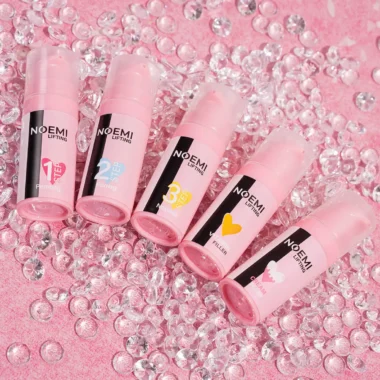
- GEL Solution 3%: a gel-consistency developer that leaves a stronger imprint on the skin. Choose it when you want a defined, filled-in look. It comes in 14 ml and 50 ml.
- Solution 6%: for coarse or grey brow hair, or when you want more lightening. It is also available at CHF 9.90 and can be diluted.
- Solution 0%: a corrector that lowers peroxide strength. Mixed 1:1 with 6% it gives 3%, and with 3% it gives 1.5%, which is useful for gentle lash tinting or after lamination.
Consistent ratios are what make a result repeatable from client to client. The ChromeMix 2in1 Ratio Tool helps you measure shade mixes (for example 80% one shade and 20% another), and the nozzle caps help you squeeze out a thin, controlled amount of dye.
Choosing a shade by hair and skin tone
The natural brow colour, the hair on the head and the skin undertone all matter. A few working rules:
- Stay close to the natural colour. Brows are usually one to two tones lighter than dark hair, and rarely the same shade as black hair.
- Cool skin, ash or neutral undertones often look more natural with a neutral or slightly cool brown. Warm skin usually suits a warmer brown.
- Grey and white hairs take colour differently and often come out warmer or lighter. A 6% developer and a longer, well-judged process can help, always within the manufacturer guidance.
- Blondes and very fair clients look best with a soft, lighter result. A dark tint on very light skin shows its stain more.
- Lashes are different: black or blue-black reads as natural definition for many clients, while softer browns suit very fair colouring.
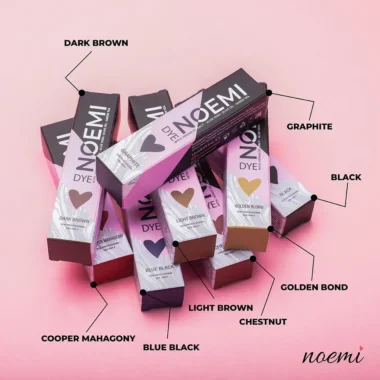
The Noemi hybrid range is sold in shades including black, blue-black, graphite, dark brown, medium brown, light brown, chestnut, mahogany and golden blonde, plus a clear corrector and a yellow corrector. The dedicated Hybrid Lash Dye comes in black night, blue night, burgundy, deep brown and purple. To show clients what to expect, the Colour Mix Guide provides 25 physical swatches, and the Noemi Note is an educational manual covering hair level, depth and mixing formulas.
Fine-tuning with correctors
Two correctors make custom colours possible. The neutral (clear) corrector, mixed into a shade, lightens the final result by a few tones, which is handy if a shade looks too dark in the dish. The yellow corrector adds golden tones, counteracts unwanted cool tones, or can be used to build new shades. Always do a small test before using a new custom mix on a client.
Patch testing and contraindications
Every tint contains ingredients that can trigger a reaction in a sensitive client. A patch test is not optional.
- Apply a small amount of the mixed product to a discreet area, as described by the manufacturer, such as behind the ear or on the inner forearm.
- Leave it for the recommended time, then observe the area for 24-48 hours before the first service.
- Record the date and result on the client card.
- Repeat the test if the client has changed products or reacted to anything since the last visit.
Do not tint over irritated, broken, sunburnt or inflamed skin, or on a client who has had an eye infection or a recent injection or procedure in the area. If a client reports burning, stinging or swelling during the service, stop, remove the product with water and refer them to a doctor when needed. When in doubt, decline the service. For sensitive clients, test kits are practical: the Hybrid Dye Test Sachet Kit holds 10 colour sachets (1 g each), a clear corrector, 3 cream developers and 2 gel developers for CHF 19.90, and single 1 g sachets cost CHF 2.50.
Step-by-step tinting
1. Prepare the client and the station
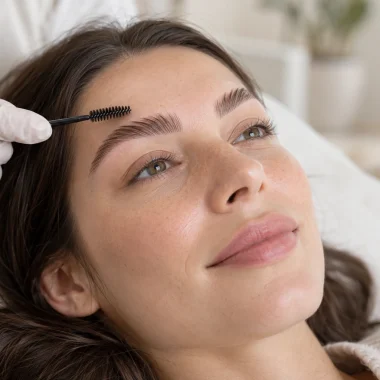
Check the consultation form and patch test, ask about allergies and recent treatments, then remove makeup and brush the hairs into their natural direction with a clean spoolie.
2. Map and cleanse
Map the shape with a thread or paste. The pink Brow Mapping Paste shows clearly against skin and forms a protective layer that helps prevent unwanted colour transfer. Then cleanse with a brow shampoo and use a primer. The Noemi Brow Primer is a rinse-free step: apply one pump on a dry cotton pad, wipe over the brows and remove the excess. It cleanses, nourishes and prepares the skin for pigment, and also comes in the Prep & Remove Set at CHF 25.90.
3. Protect the skin
Apply a barrier cream or protective product around the edge of the design. For lashes, use eye pads. The Lower Lashes Patch protects the skin during lash lifting and tinting while shaping the lower lashes. Keep tint away from the waterline and eyes at all times.
4. Mix and apply
Mix tint and developer 1:1 to a smooth cream with no lumps. Start with the thickest part of the brow, usually the body, then do the tail and finish with the head so the front stays natural. Use a fine angled brush and work in small strokes along the hair direction.
5. Time it
Follow the manufacturer: 10-15 minutes is the standard window for Noemi mixes. Fine, light hair often needs less than coarse, dark hair, and you can check a small spot after ten minutes. A two-channel timer such as the Dual Timer is useful when a lash and a brow service run at the same time.
6. Remove and finish
Remove the product with a damp or dry cotton pad, depending on the product instructions, wiping in the hair direction. Clean up any remaining colour from the skin, brush the hair into shape and give aftercare advice.
Removing stains and correcting an over-dark result
Even careful artists get the occasional stain on the skin. The sooner you treat it, the easier it is. The Remover for Tint and Henna (50 ml) is a rose-water-enriched formula for use on brows, eyelids and lashes: apply one pump to a dry cotton pad or micro-brush, rub gently until the stain lifts, take off the excess with a cotton pad and rinse the area with a water-soaked pad. It also reduces colour intensity when a result is too dark. The manufacturer advises using a dry cotton pad if you are removing tint after the processing time, and recommends pairing remover and tint from the same brand. If a stain persists, do not scrub the skin hard.
Aftercare that makes the colour last
Give clients a short, written aftercare routine. Standard advice for fresh tint is to avoid heavy exfoliation, oil-based products and prolonged hot water on the brows for the first day or two, and to avoid swimming and saunas during that window. A dedicated post-tint product helps too. The Color Care Brow Shampoo (100 ml), CHF 17.90, has a pH of 4.0, removes dye residue from skin and hair without washing the colour out and neutralises alkaline traces after colouring. It can also be used on lashes. In the salon, use it directly after the service; clients can then continue at home with a gentle, suitable cleanser.
Suggest a rebook around the 4-6 week mark and note the shade and ratio so you can repeat it.
Building a tinting range for your studio
If you are starting out, a sensible set contains one hybrid dye in two or three base shades, a 3% developer, a 6% or 0% solution if you want flexibility, a clear corrector, a primer and remover, a brow shampoo, a timer and a few swatches. You can browse the whole dye category or see the full Noemi Professional range.
FAQ
How long does a brow tint last?
For Noemi hybrid dye, the manufacturer indicates around 8 days on the skin and 4-6 weeks on the hair. Actual results vary with skin type, hair growth, aftercare and cleansing habits.
Can I use the same tint on brows and lashes?
Noemi states that its hybrid dye works on both brows and lashes. Use eye pads, keep the product away from the eye and consider a lower developer strength on lashes, following the instructions.
Do I need a patch test every time?
Do one before the first service and repeat it whenever a client has had a reaction, changed products or has a long gap since the last test, according to your insurer and salon policy.
How do I remove tint from the skin?
Treat it as soon as possible with a dedicated tint remover on a cotton pad or micro-brush, following the product instructions, and rinse with a damp pad.
Which developer should I choose?
Use 3% as the standard, GEL Solution for a stronger skin imprint, 6% for coarse or grey hair and the 0% corrector to lower strength for gentler work. Always follow the 1:1 ratio and the 10-15 minute window.