The rod is the quiet decision that shapes every lash lift. Lotion timing, glue and aftercare all matter, but if the rod is wrong for the client, the result will look flat, kinked or over-curled no matter how well the rest of the service goes. This guide explains curl types, sizes, soft silicone versus standard rods, glue use and the mistakes we see most often, so you can choose with confidence.
What a lash lift rod actually does
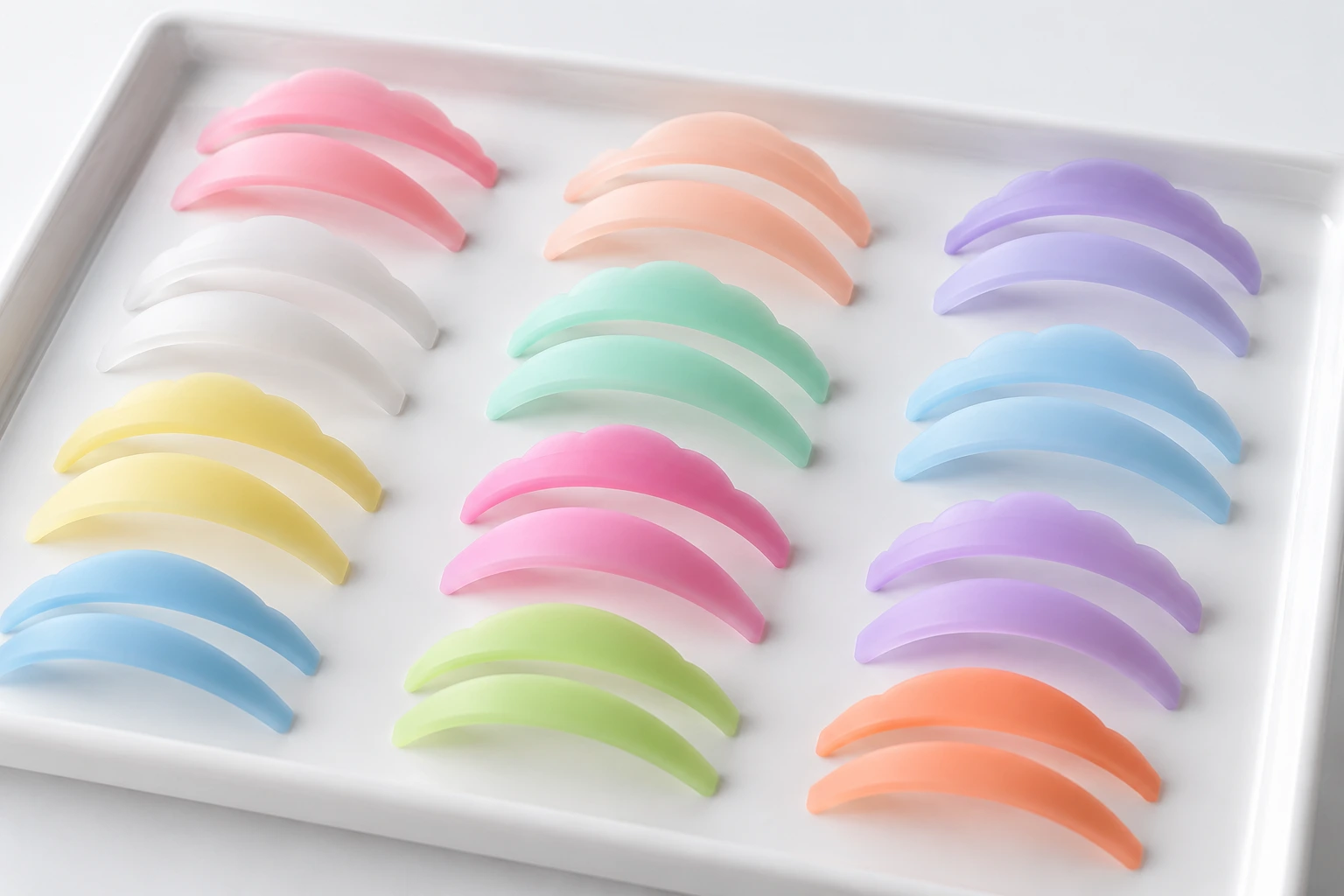
A lash lift rod (also called a shield, pad or perm rod) is a small silicone form that sits on the upper eyelid, close to the lash line. The natural lashes are brushed up and around the form, held in place, and processed with lifting and setting lotions. The shape of the rod therefore becomes the shape of the lash once the treatment is finished.
Two variables define the result: the curl profile (how the rod curves) and the size (how tight or wide that curve is). A third variable, the softness of the silicone, decides how comfortably and securely the rod sits on the lid.
Curl types explained
Brands name their curls slightly differently, but the main families are consistent across the industry.
C curl
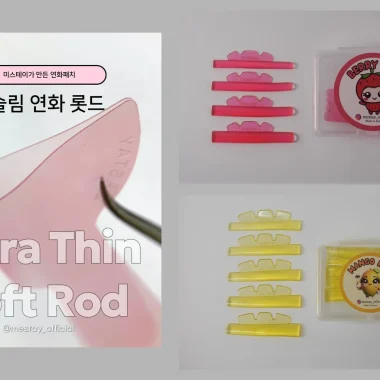
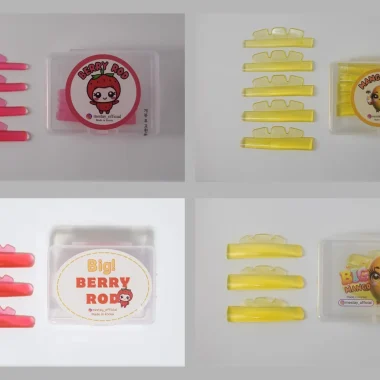
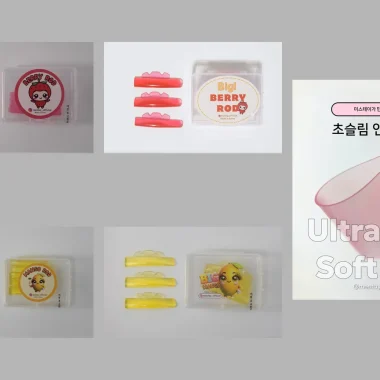
The classic rounded curve. It lifts the lashes in a smooth arc and gives a natural, everyday look. It is the safest starting point for most clients and the usual choice when the brief is “my lashes, but better”. The Mestay Berry Rod is a C curl rod with a rounded curve, sold as a box of 4 pairs (8 rods) for CHF 35.90.
CI curl
A hybrid between the vertical height of an I curl and the roundness of a C curl. It gives a wide-eyed, longer-looking lash without the hard angle of a pure I curl. The Early Slime Lash Lift Rods in CI curl come as a set of four pairs (S, M, L, LL) for CHF 31.90.
LC curl
Rounded at the root, lifted and more defined at the tips. This is the “statement” curl: it opens the eye and shows more definition than a C curl. The Mestay Mango Rod is an LC curl rod, sold as a box of 5 pairs (10 rods) for CHF 39.90.
L curl
In general, an L curl is a more angular shape with a pronounced bend, which lifts the lash from the base and then turns sharply. It suits straight, heavy or downward-growing lashes that need a strong change of direction. We mention it for completeness; the rods described in this guide are C, CI, LC, I and CU profiles.
I and CU curls
An I curl lifts almost straight up, showing every millimetre of natural length with a sharp, graphic finish. The CU curl is a lifted shape built for strong, high-impact definition. Early offers both: the Dumpling Rod in an I-curl edition and the winged Boong Boongi car rod for CU-curl work. Both sit in our Korean lash lift range.
Oversized rods
Oversized rods keep the same curl profile but use a larger diameter, so the curve is gentler. They are ideal for longer lashes, which would be pushed into a tight, over-curled shape on a small rod. Mestay offers two: the Big Berry Rod (oversized C curl) and the Big Mango Rod (oversized LC curl), each as a box of 3 pairs (6 rods) at CHF 30.90.
Curl comparison at a glance
| Curl type | Look it creates | Best for |
|---|---|---|
| C | Soft, round, natural arc | Everyday looks, first-time clients, medium lashes |
| CI | Wide-eyed, lifted, longer-looking | Clients who want height without a hard angle |
| LC | Rounded root, defined sharp tips | Bold, dramatic lift; straight or heavy lashes |
| L | Angular, strong change of direction | Very straight or downward-growing lashes |
| I / CU | Vertical, high-impact, graphic | Showing natural length; experienced artists |
| Oversized (C or LC) | Same curl, gentler and wider curve | Long or thick lashes; softer, more open results |
Choosing the right size
Size is where most lifts are won or lost. The rule is simple: the rod should match the length of the lashes, not the ambition of the client. Lashes that are too long for a small rod will be bent at the tips and crowd into the lid. Lashes that are short on a large rod will barely move and fall straight at the base.
Match rod size to lash length
- Short lashes: a small size (S) lifts without burying the lashes in the form.
- Medium lashes: M is the workhorse; if the lashes sit between two sizes, size down for a stronger lift and up for a softer one.
- Long lashes: L or LL, or an oversized rod, so the curve stays open instead of tight.
- Mixed lengths: the inner and outer corners are often shorter than the centre. Use a smaller rod at the corners if your technique allows it, or choose a size that suits the majority and accept a slightly softer lift at the edges.
A multi-size set is the practical answer. The Early Slime CI set covers S, M, L and LL in one box, which means one purchase handles most of your client mix.
Think about eye shape
Eye shape does not change the rule above, but it changes the curl you pick.
- Hooded or deep-set eyes: a lash that lifts too close to the lid disappears under the fold. A CI or LC profile, with more height, usually reads better.
- Round, prominent eyes: a softer C curl keeps the look balanced; an aggressive curl can feel too theatrical.
- Almond eyes: they handle almost any curl, so choose by lash length and desired drama.
- Downturned or monolid eyes: a higher lift opens the eye, but check the rod sits flat so the curl starts from the root.
Always judge on the open eye, not on the closed lid. Ask the client to look straight ahead and check the lash angle in the mirror before you apply any lotion.
Soft silicone and “slime” rods versus standard rods
Traditional lash lift shields were firm and needed a generous amount of glue to stay in place. Modern soft silicone rods work differently. The material has a natural grip on the skin, so it holds without being pushed down hard.
Why softness matters
- Comfort: a flexible rod follows the curve of the lid instead of pressing into it, which matters during a 20 to 30 minute service.
- Stability: a rod that hugs the lid does not slide when the client blinks or the lashes are repositioned.
- Cleaner geometry: a well-engineered soft rod helps lashes follow the curve root to tip, which reduces the risk of kinks.
What “slime” rods are
“Slime” is the Korean trade nickname for ultra-soft, tacky silicone that clings to the eyelid with minimal glue. Early’s Slime CI rods are described by the brand as having a “Mochi-Soft” texture and a natural suction to the skin. Early also makes the Dumpling Rod, the Mandu Softening Rod and the Boong Boongi, all in soft silicone.
Standard versus soft: the practical difference
Firm rods can still do excellent work, and many artists prefer their predictability on very thick, heavy lashes. Soft rods tend to win on comfort, speed and ease of placement. If you are building a kit, hold a few of each and let your clients’ lashes decide. For fine detail work, the Mestay Ultra Thin “Rabbit Soft” Rod has a very thin profile and two flexible “rabbit ear” tabs that gently lift the eyelid skin, giving better visibility of the lash line.
Glue: how much, and when you can skip it
Glue (or balm) has two jobs: it fixes the rod to the lid and it holds the lashes to the rod. Soft silicone reduces the first need and, in many cases, removes it entirely. Mestay lists its Berry, Mango, Big Berry and Big Mango rods as “no glue needed” for rod placement, because the silicone adheres to the skin naturally.
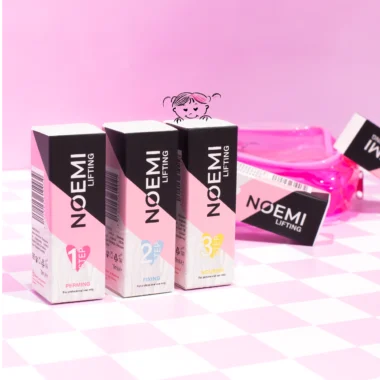
The lashes themselves still need a secure hold, especially if they are slippery or stubborn. That is where a balm helps. Options we carry include Noemi Glue Balm Strong (CHF 22.90) and Early Balm Pro (CHF 22.90), which stays workable while you place the lashes.
Glue guidelines that always apply
- Use a thin, even layer. More glue does not mean more hold, it means more mess and a harder cleanup.
- Keep adhesive away from the lid margin and the waterline.
- Check that the rod is clean and dry before you apply anything.
- Always follow the manufacturer’s instructions for your lotion and glue system.
Common mistakes
- Choosing by habit, not by lashes. Using M on every client guarantees uneven results. Measure the lashes each time.
- Going too small for long lashes. This causes the over-curled, “hooked” look. Step up a size or use an oversized rod.
- Placing the rod too far from the lash line. The curl starts above the root and the base stays flat. The rod should sit snug against the roots.
- Uneven lash distribution. Overlapping or crossed lashes on the rod will set that way. Separate every lash with a fine tool.
- Excess glue on the rod. It lifts the rod, creates air gaps and makes lashes stick together.
- Rods that are dirty or worn. Residue weakens grip. Clean after each client and replace rods that are stretched, torn or permanently deformed.
- Different rod sizes left and right. Unless the eyes genuinely differ, use matching rods. Check symmetry in the mirror before you apply lotion.
Caring for your rods
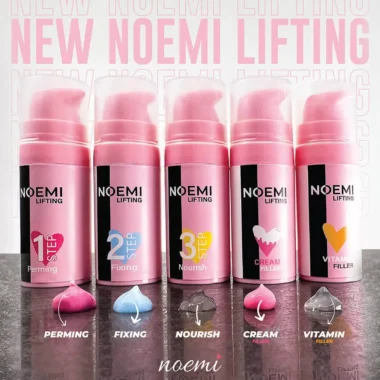
Silicone rods are reusable, but only if they are clean. Rinse with warm water and mild soap after each use, as Noemi recommends for its pads, dry them fully, and store them flat in a closed container. Wipe with a salon-approved disinfectant between clients according to your local hygiene rules. Avoid oils and heavy creams near the rods, since residue reduces grip.
Building a rod collection that earns its keep
You do not need every shape. A sensible starter selection for a salon looks like this:
- One C curl set for natural, everyday lifts.
- One LC or CI set for clients who want more definition.
- One oversized set for long lashes.
As your confidence grows, add specialty shapes. Browse the full selection in our accessories and lash categories, or shop by brand: Mestay and Early. If something is not right on arrival, our refund and returns policy explains the process.
FAQ
What is the best lash lift rod for beginners?
A C curl in a mid size (M) is the most forgiving shape. It gives a natural result, tolerates small placement errors and suits most lash lengths. Add oversized or LC rods once you can reliably judge lash length.
How do I know which size to use?
Match the rod to lash length: small for short lashes, medium for average lashes, large or oversized for long lashes. If you are between two sizes, the smaller one gives a stronger lift and the larger one a gentler curve.
Do I still need glue with soft silicone rods?
The rod itself usually does not need glue, because the silicone grips the skin. The lashes may still need a balm or glue to stay fixed to the rod, particularly if they are slippery. Follow your lotion system’s instructions.
What is the difference between C and LC curls?
A C curl is a uniform round arc with a natural effect. An LC curl is rounded at the root but lifts more sharply at the tips, which creates a bolder, more defined look.
How long do silicone lash lift rods last?
With good cleaning and storage they can be reused for many treatments. Replace them when they look stretched, torn, sticky or no longer grip the lid, since a worn rod can compromise the result.